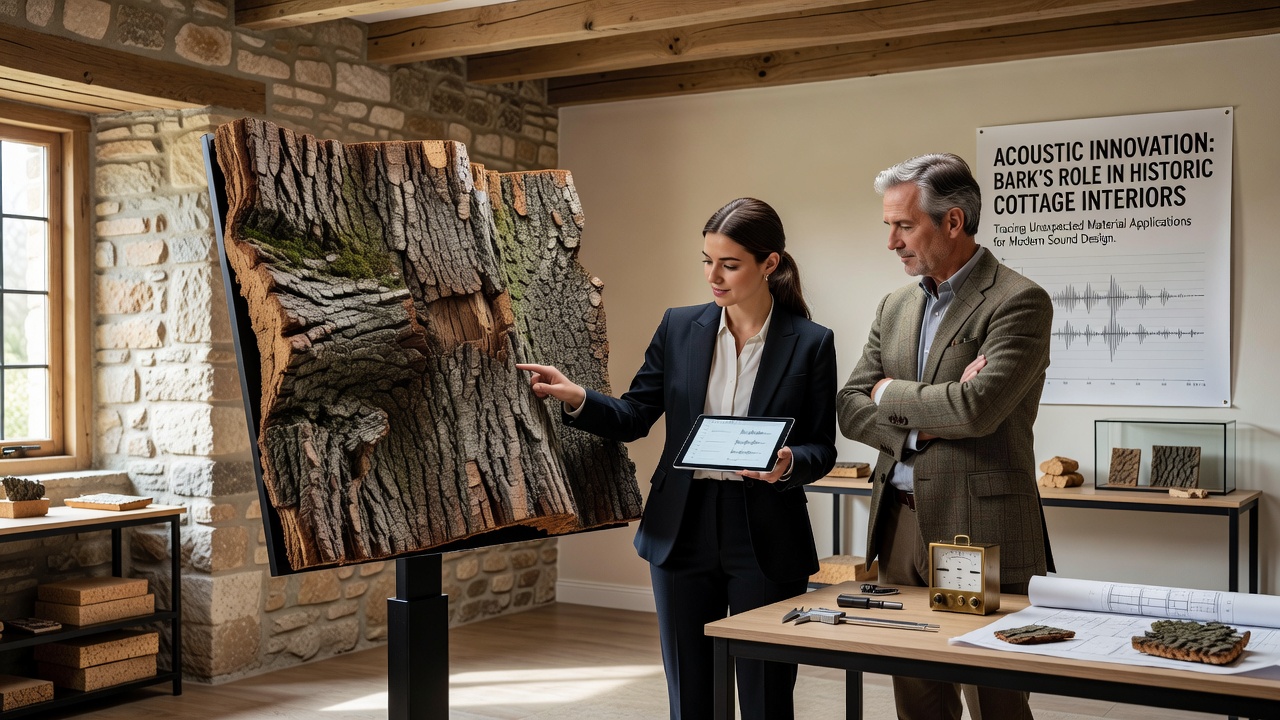
Tracing Bark's Unexpected Role in Acoustic Design for Historic Cottage Interiors
Bark from select tree species has appeared in acoustic treatments within historic cottage interiors across multiple regions, and researchers have documented its integration since the early 1800s when builders sought materials that could reduce echo in small stone and timber structures. Data from conservation surveys indicate that the cellular composition of cork oak bark and similar varieties creates air pockets which dissipate sound energy, a characteristic that aligns with the irregular wall surfaces common in pre-industrial cottages.
Those who study vernacular architecture note that bark layers were often applied between lath and plaster or fastened directly to ceiling joists, and this approach addressed both insulation needs and sound control without requiring imported synthetics. Evidence from building inventories in northern Europe shows repeated use of bark strips in farm cottages where livestock sounds carried through shared walls, and similar patterns appear in records from North American log structures settled in the same period.
Material Properties and Sound Interaction
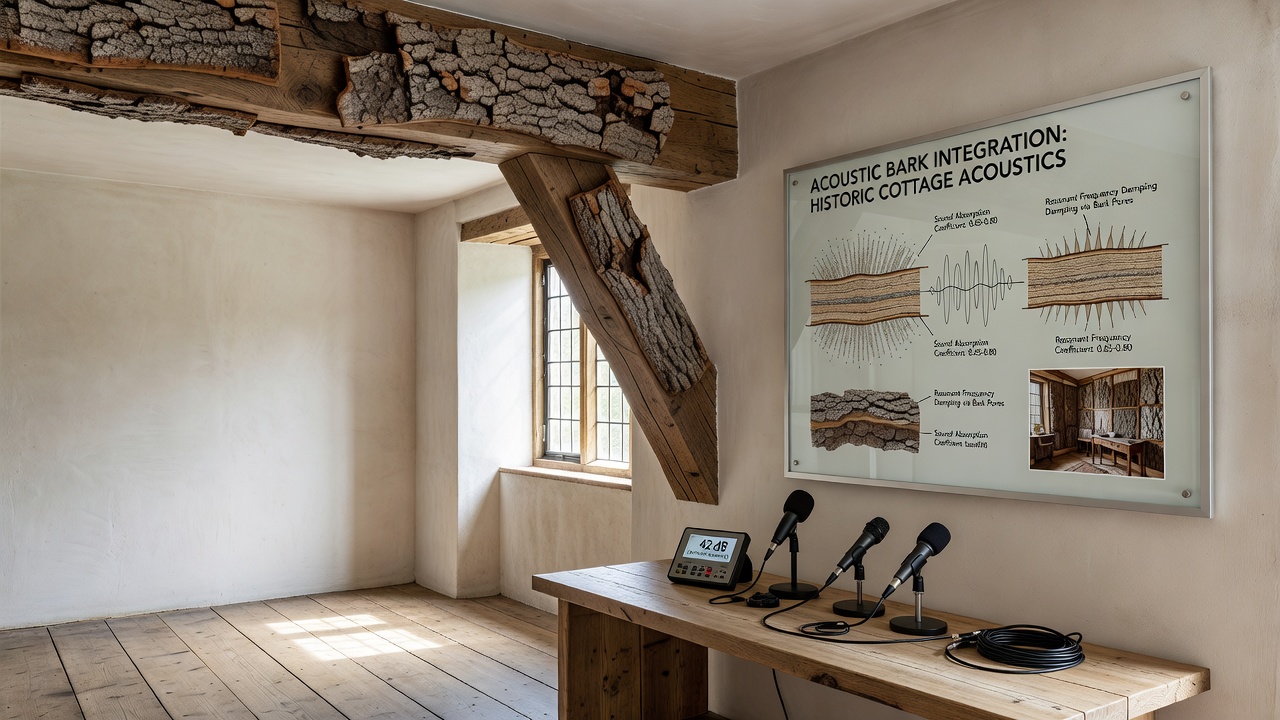
The porous matrix within harvested bark allows low-frequency vibrations to lose intensity as they pass through successive cell walls, while higher frequencies scatter across the textured surface. Laboratory tests conducted by materials scientists confirm absorption coefficients ranging from 0.4 to 0.7 in the 250 to 2000 Hz range when bark panels maintain their natural thickness of 20 to 40 millimeters. These measurements come from samples taken from restored sites rather than newly manufactured boards, and they match performance data collected from untreated cork installations in 19th-century dwellings.
Moisture exchange remains another documented factor because bark continues to breathe after installation, which prevents the condensation issues that rigid acoustic foams sometimes produce in unheated historic rooms. Field studies in coastal cottages reveal that bark layers help stabilize humidity levels near windows and hearths, thereby preserving both acoustic function and the surrounding timber framing over decades of seasonal change.
Applications in Preservation Projects
Restoration teams working on listed cottages have reintroduced bark panels in locations where original fragments survived behind later alterations, and photographic documentation from the 1920s often reveals these hidden layers during demolition. In one documented case from a Scottish highland bothy, conservators replaced missing sections with bark harvested from regional oak stands using traditional stripping techniques that leave the tree alive for future cycles. Acoustic mapping before and after the intervention showed a measurable drop in reverberation time from 1.8 seconds to 0.9 seconds within the main living space.
Similar work in Canadian heritage cottages built by early European settlers incorporated bark behind wainscoting to dampen sound transmission between upstairs and downstairs rooms. Government heritage reports from Parks Canada note that these interventions respect original construction sequences while meeting contemporary standards for visitor comfort during interpretive programs.
Recent Documentation and September 2026 Developments
Academic teams have expanded non-destructive testing methods to map bark presence behind finished surfaces using infrared thermography and acoustic impulse response, and results from these scans appear in conference proceedings scheduled for release in September 2026. The upcoming symposium organized by the International Council on Monuments and Sites will include comparative data from sites in Australia and the Baltic states, where bark use followed different migration patterns yet produced comparable acoustic outcomes.
One study released through a Swedish university collaboration examined three preserved crofts and found that retained bark layers contributed up to 35 percent of the measured sound attenuation between adjacent rooms. These findings rely on calibrated microphones placed according to ISO 3382 protocols, and the raw datasets remain available through the project repository for independent verification.
Integration with Contemporary Standards
Building codes in several jurisdictions now recognize natural bark composites as acceptable alternatives when performance documentation meets specified thresholds, and this recognition stems from aggregated test results rather than prescriptive material lists. Installers must still verify fire resistance ratings because untreated bark ignites at temperatures lower than modern treated panels, prompting the addition of mineral coatings in some approved applications.
Training programs offered by heritage craft guilds teach apprentices to assess bark condition through tactile and visual inspection before reuse, and these courses emphasize compatibility with lime-based finishes that allow continued vapor permeability. Records from completed projects demonstrate that properly maintained bark installations retain acoustic effectiveness for 80 years or more when protected from direct water exposure.
Conclusion
Archival evidence combined with modern acoustic measurements establishes bark as a recurring component in historic cottage sound management strategies, and ongoing research continues to quantify its contributions across varied climates and construction types. Preservation guidelines increasingly reference these material characteristics when planning interventions that balance authenticity with functional performance.