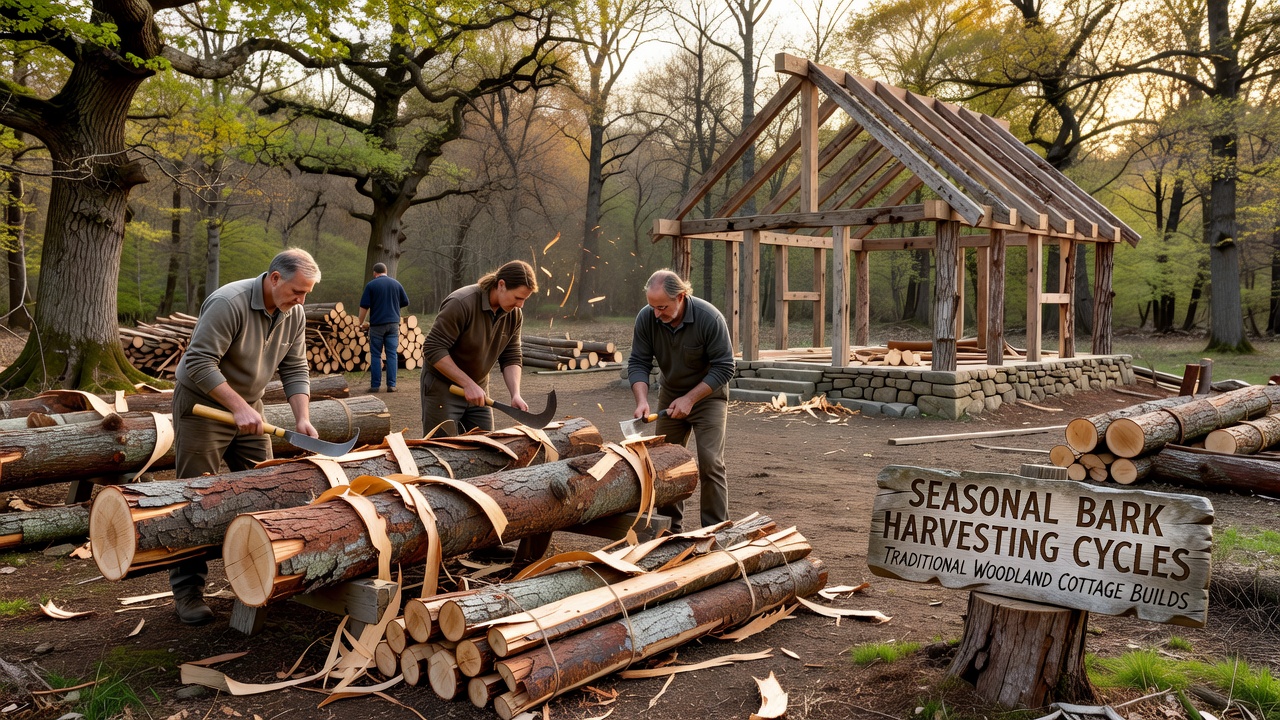
Seasonal Bark Harvesting Cycles in Traditional Woodland Cottage Builds
Traditional woodland cottage construction relies on bark harvested from specific tree species at precise points in the annual growth cycle, and observers note that timing directly influences material durability along with structural performance. In regions where these builds remain common, practitioners select birch, oak, and certain conifers because their bark layers separate cleanly when sap flow reaches peak levels, typically during early spring months before leaves fully emerge. Data from forestry records shows that harvesting outside these windows increases the risk of tree damage while reducing the bark's flexibility for applications such as roofing, wall cladding, and moisture barriers.
Annual Growth Phases and Harvest Windows
Tree physiology drives the seasonal availability of usable bark, and researchers have documented how rising temperatures in late winter trigger cambium activity that loosens the outer layers from the underlying wood. This period usually spans March through May in temperate zones of North America and Europe, although local climate variations shift the exact dates by several weeks. Once summer heat arrives, bark adheres more tightly and becomes brittle, making clean removal difficult without specialized tools or excessive force. Fall offers a secondary window in some areas where cooler nights slow sap movement again, yet practitioners often reserve this season for smaller repairs rather than large-scale collection because moisture content drops and splitting becomes more common during drying.
Winter harvesting occurs mainly in northern climates where frozen ground allows access to remote woodland sites, and crews work with dormant trees whose bark remains intact yet requires additional steaming or soaking afterward to restore pliability. Studies conducted by Natural Resources Canada indicate that winter-collected bark from white birch maintains comparable tensile strength to spring material when processed correctly, which explains its continued use in remote cottage projects across boreal forests.
Species Selection and Regional Practices
Builders match bark type to local tree availability and climate demands, and data collected across multiple sites reveals consistent preferences for species that regenerate outer layers within five to seven years. In Scandinavian traditions, Scots pine bark serves roofing needs because its thickness provides natural insulation, while North American builds frequently incorporate paper birch for its lightweight, waterproof qualities. Australian eucalyptus plantations supply alternative bark materials for similar cottage-style structures in temperate southern regions, although harvesting cycles there align with that continent's reversed seasons and require coordination with local forestry permits.
Equipment remains minimal across these traditions, consisting of drawknives, wooden spuds, and collection sheets that prevent soil contamination. Crews typically work in small teams to limit impact on woodland ecosystems, and rotation schedules ensure no single stand faces repeated harvest within the regeneration period. Government guidelines from the Canadian Forest Service emphasize monitoring tree health metrics before and after each cycle to maintain long-term stand viability.
Processing and Storage After Collection
Once removed, bark undergoes flattening, drying, and sometimes smoking to prevent mold during storage, and these steps occur within days of harvest to preserve structural fibers. In September 2026, several woodland cooperatives plan expanded drying sheds equipped with controlled airflow systems that reduce checking and curling compared with older open-air methods. Proper curing allows the material to reach equilibrium moisture content suitable for integration into cottage frames that must withstand freeze-thaw cycles and heavy rainfall.
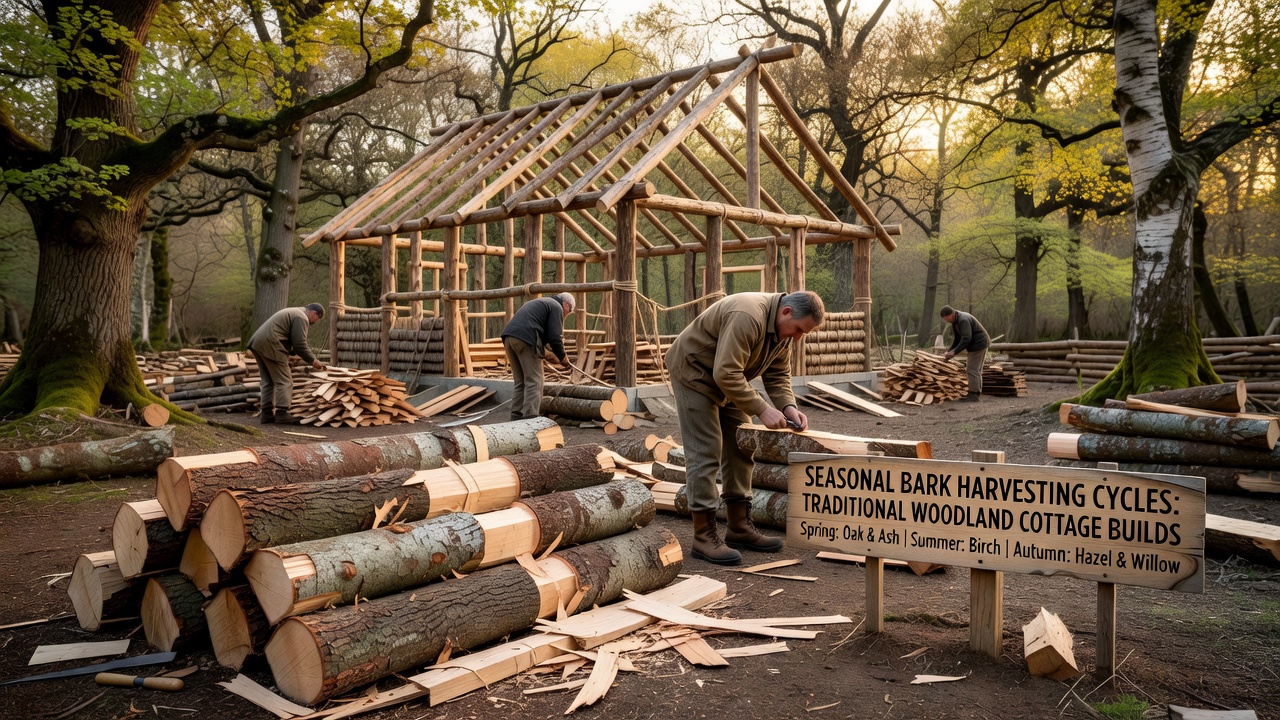
Storage facilities maintain consistent temperatures and humidity levels that mimic the original woodland conditions, and records from heritage building programs show that correctly stored bark retains flexibility for up to three years before installation. Builders often rehydrate sheets prior to fitting, which restores the pliability needed for curved surfaces around windows and eaves.
Sustainability Measures Across Cycles
Long-term viability of bark harvesting depends on adherence to rotation schedules and selective cutting practices, and figures from the European Forest Institute reveal that managed stands maintain higher biodiversity when harvest intensity stays below 15 percent of available trees per cycle. Monitoring programs track regeneration rates, pest presence, and soil nutrient levels to adjust future windows accordingly. In practice, many communities combine bark collection with other woodland activities such as selective thinning, which reduces competition for light and water among remaining trees.
Certification schemes now recognize bark as a coproduct of sustainable forestry rather than a standalone resource, and this classification encourages integration with broader timber management plans. Those who maintain traditional cottage builds report that following documented seasonal cycles produces materials with fewer defects and longer service life than off-season alternatives.
Conclusion
Seasonal bark harvesting cycles continue to support traditional woodland cottage construction through careful alignment with tree physiology and regional climate patterns. Documentation from multiple forestry agencies and research institutions demonstrates that adherence to established windows preserves both material quality and forest health across repeated annual rotations. As practices evolve with updated storage methods and monitoring tools, the core principles of timing and selectivity remain central to ongoing viability of these building techniques.